
European Space Agency (ESA). Digital Twin Case Study
The Challenge
The European Space Agency (ESA) is Europe’s gateway to space, with a mission to shape the development of Europe’s space capability and ensure that investment in space delivers tangible benefits to citizens across Europe and the wider world.
As an organisation operating at the intersection of science, technology, and public engagement, ESA faces the ongoing challenge of communicating complex, technical concepts in ways that are accessible, engaging, and meaningful to diverse audiences from industry partners and policymakers to educators and the general public.
To support this mission, ESA required innovative digital approaches that could translate advanced space programmes and research into experiences that inform, inspire, and connect audiences at scale.
The Solution
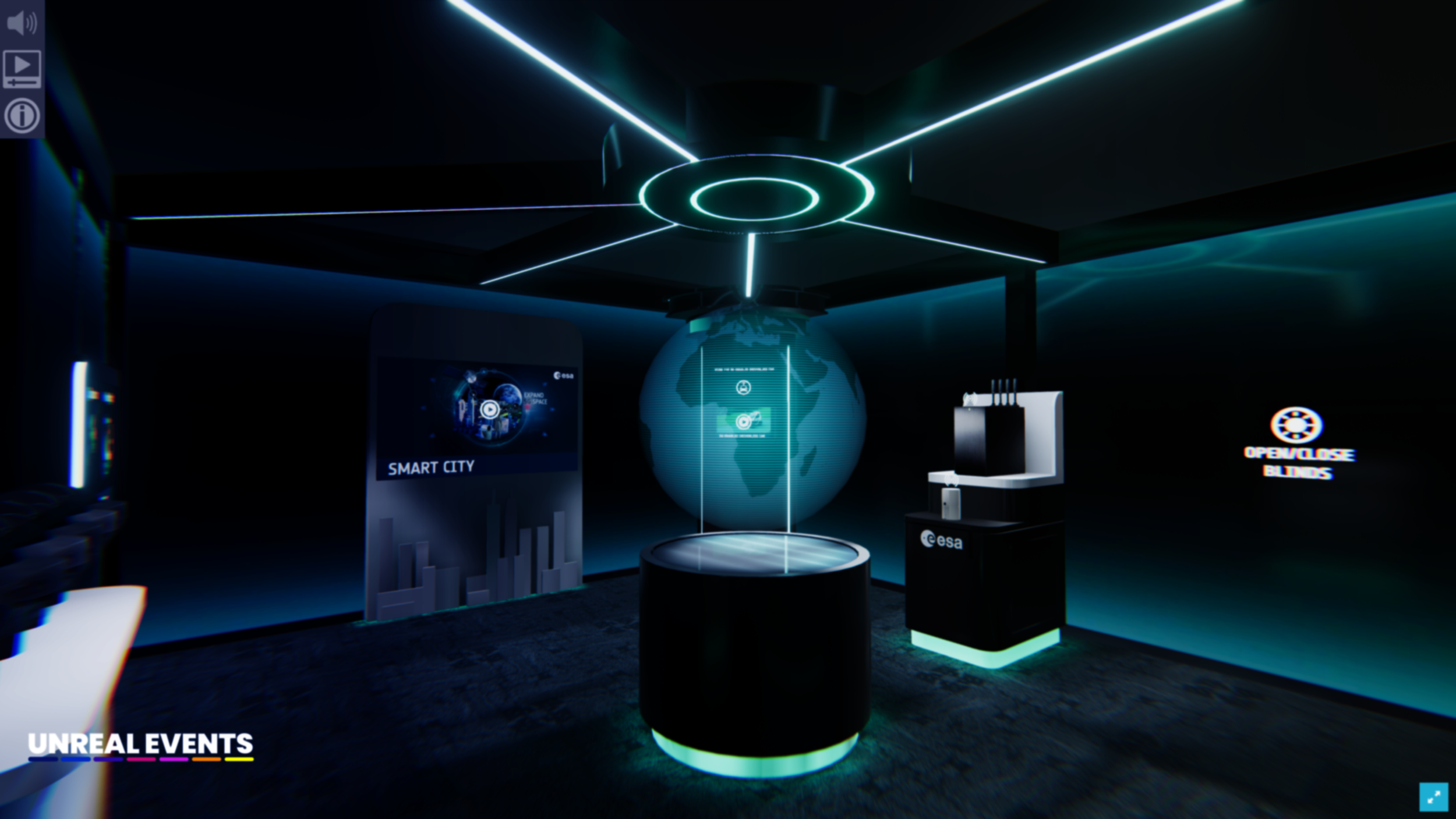
To support the launch of ESA’s 5G/6G Hub at Harwell in the UK, a space designed to foster collaboration and innovation, European Space Agency partnered with WORLDSPACE to create a fully interactive Digital Twin of the facility.
Developed in response to social distancing requirements that coincided with the hub’s opening, the Digital Twin allowed visitors to explore and engage with the space remotely, without compromising the intent or impact of the physical environment. Users could navigate the virtual hub, understand its purpose, and interact with key areas designed to showcase innovation, research, and collaboration.
By translating the physical facility into an immersive digital experience, WORLDSPACE enabled ESA to extend access beyond geographical and physical limitations ensuring the hub could still fulfil its mission as a centre for connection and knowledge-sharing from day one.

The Outcome
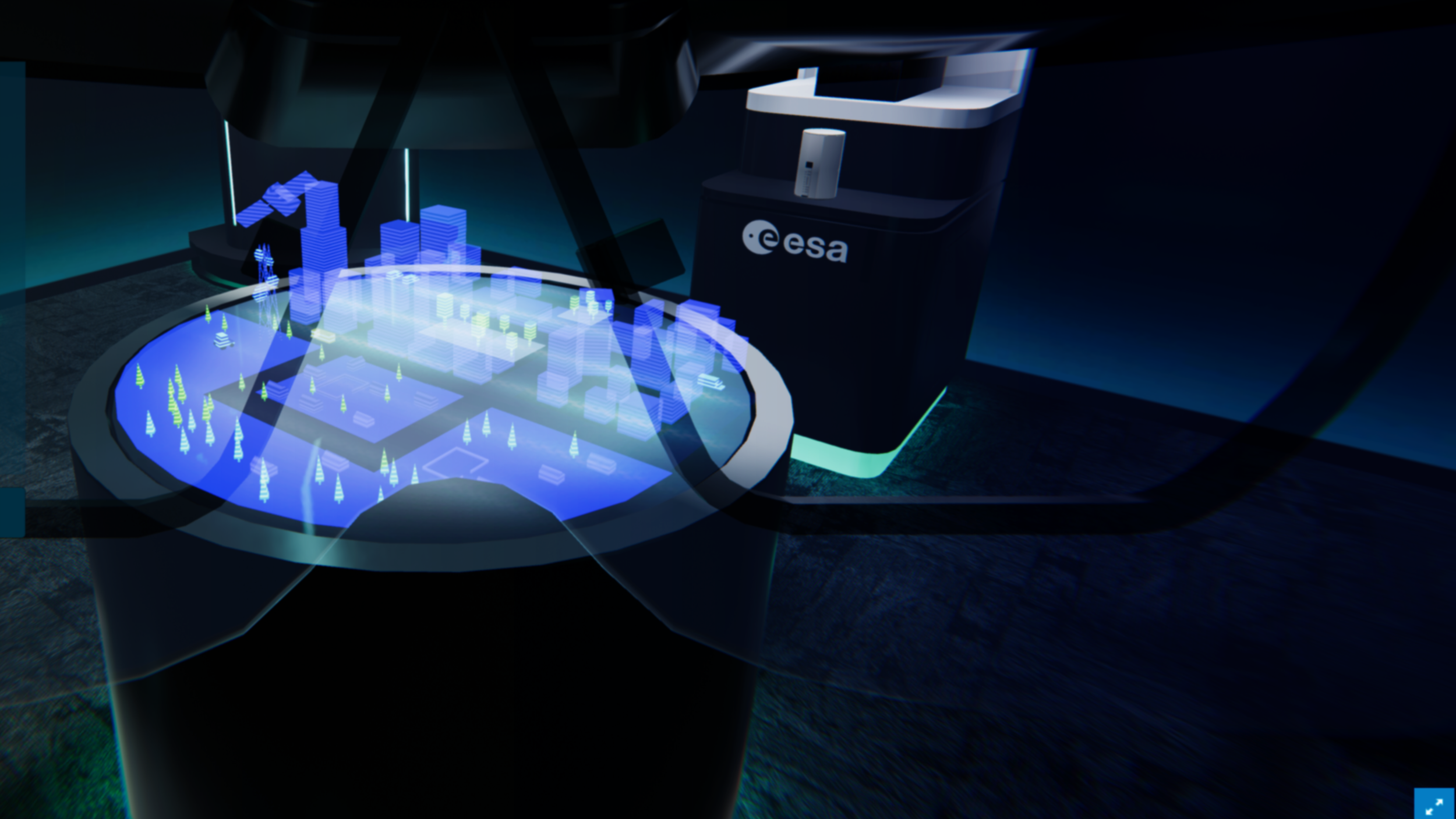
At the centre of the Digital Twin experience sat an interactive hologram, streaming the same content being presented at the physical hub in real time. This ensured complete alignment between the on-site and remote experiences, allowing off-site visitors to engage with exactly the same material as those attending in person.
Visitors could interact directly with the experience by selecting a HoloLens AR headset, unlocking additional layers of content and interaction within the virtual environment. This approach blended immersive visuals with intuitive navigation, enabling users to explore complex ideas in a way that felt both accessible and engaging.
The result was a seamless hybrid experience that extended the reach of ESA’s 5G/6G Hub beyond its physical location. By combining Digital Twin technology with live content and AR interaction, European Space Agency was able to launch the hub without compromise, maintaining collaboration, accessibility, and engagement despite external constraints, and setting a benchmark for how innovation spaces can be experienced remotely.